My First Post
Hey everybody! Welcome to my anthropology blog, where I’ll be documenting my journey learning about anthropology as well as examining applications of anthropology to everyday phenomena.
A little bit about myself – my name is Kyle and I am a high school student aspiring to learn more about the world of anthropology. For my first post, I’m going to be discussing the “uncanny valley” (UV) theory and how it is applied to people of different cultures. I’ve been fascinated with this topic since I learned about it in a YouTube video, and I figured it would make for a good first article.
The “Uncanny Valley”
Before we dive into anthropological applications of this phenomenon, let’s first discuss what the uncanny valley actually is. The term was first coined by Japanese robotics professor Masahiro Mori in his 1970 book Bukimi No Tani (literally translates to “The Uncanny Valley”). The general idea of the theory goes something like this: as the realism of a robot or non-living humanoid object increases, the neurological response of surrounding humans becomes increasingly comfortable and empathetic towards the object until it approaches a certain point of realism (this can be illustrated by the affection a child feels towards figures like dolls). Approaching this point of realism, empathy towards the object drops sharply into a negative level (illustrated on the graph below) before increasing again as the object approaches the point of being an actual human. This sharp drop is what is referred to as the “uncanny valley”- a spike in negative neurological response around the point of human likeness that resembles a valley on a graph (Britannica). Unfortunately, empirical evidence of the UV is lacking, to say the least, as it is uncertain if accurate studies have been conducted to the extent that we can verify the specifics of this phenomenon. The basic idea can still be validated, though, by the fact that I’d rather be chased by a teddy bear than a zombie. The graph from Britannica pictured below gives decent examples of different objects and where they fall along the uncanny valley.

Anthropology Time…
While the uncanny valley more of a psychology-centered topic, there are a wide variety of anthropological aspects that play a role in the UV theory.
The primary factor influencing perceptions of the uncanny valley across cultures that I will talk about today is the “other-race” effect. The “other-race” effect (OR) is described as being the tendency for one to more easily recognize and distinguish faces of individuals of their own race (as opposed to individuals of other races). Interestingly, members of a given race tend to notice fluctuations in the facial structures of figures designed to be classified as said race. In a study conducted by Ayako Saneyoshi et al., a group of 28 Japanese university students and 23 Norwegian students were shown multiple images of both Japanese and Norwegian figures, with the figure’s eyes being scaled up to 20% over or under the typical size. Researchers utilized eye tracking technology to monitor the responses of the students; pupillary diameter can be used as an accurate measure of the response of an individual to faces. The study found both groups more likely to be unsettled/feel less affinity to the altered figures of their own races. Saneyoshi attributes these responses to the heightened exposure one receives to members of their own race throughout their lives. To summarize, the OR effect leads individuals to detect changes and feel greater unease at a higher rate when exposed to figures of their own race.
The Future?
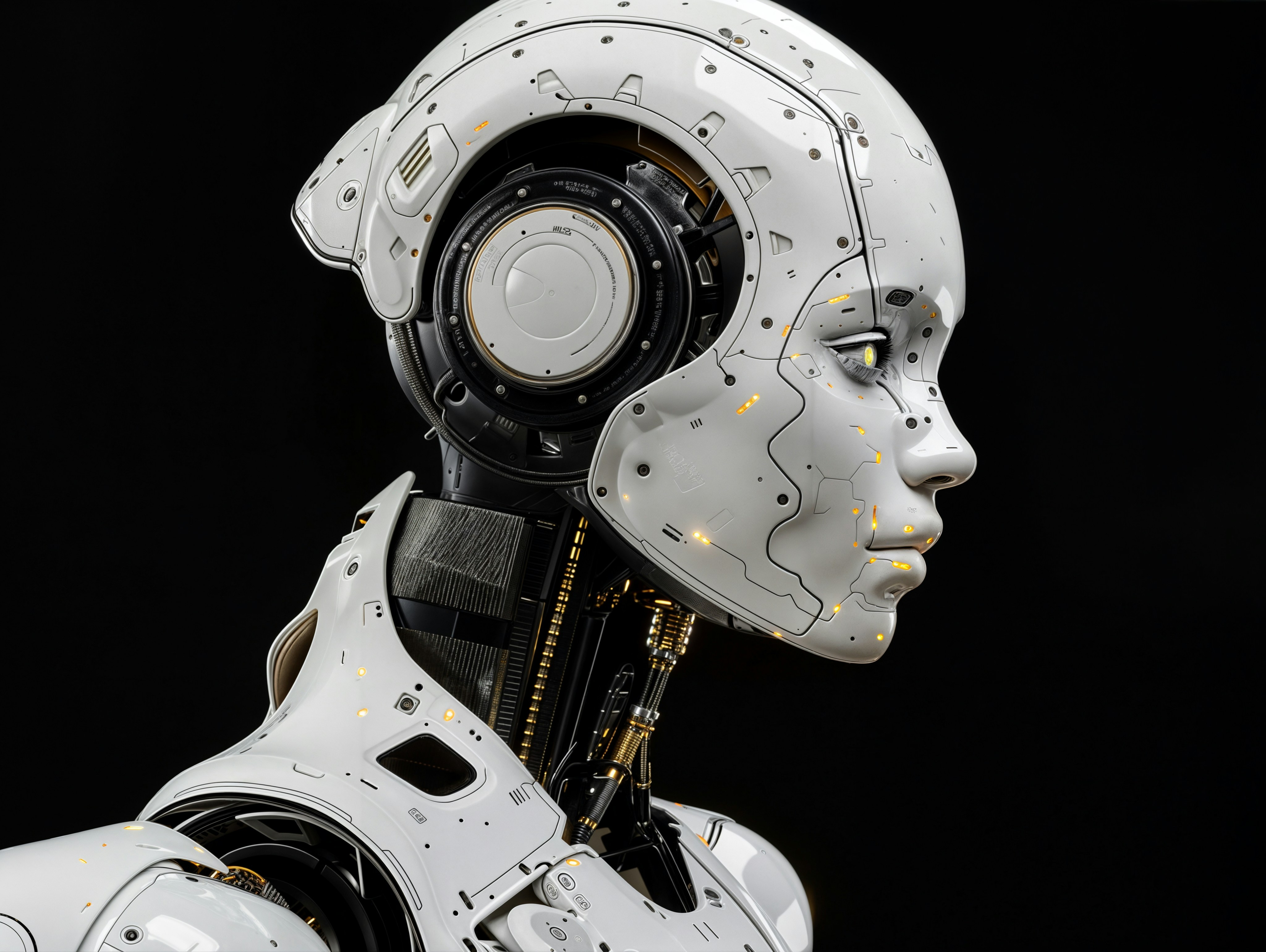
As artificial intelligence becomes more and more humanoid in its behaviors, and innovations in robotics technology allow us to create increasingly realistic robots, the relationship between man and computer must be addressed in order for these systems to work to their fullest efficiency. The uncanny valley is an important factor to account for as this technology advances, as it provides a solid foundation for human response to robotics and can be utilized to maintain harmony between life and tech. At the moment, scientists working to examine this relationship have concluded that robots should be designed with clearly different appearances to humans in order to make them acceptable to today’s population.
Sources
Kendall, & Emily. (2022, September 20). Uncanny valley | Definition, Origin, & Facts. Encyclopedia Britannica. https://www.britannica.com/topic/uncanny-valley
Saneyoshi, A. (2022, October). The other-race effect in the uncanny valley. International Journal of Human-Computer Studies, 166(102871). https://doi.org/10.1016/j.jihcs.2022.102871
Leave a Reply