Hello all, and welcome to my first post of the new year! Today, I am researching a rather niche topic that did not realize could be looked at through an anthropological lens: attachment styles. I recently learned about this psychological phenomenon during my studies in AP Psych class, and I found the science behind innate infant behaviors to be fascinating.
A Brief History of Attachment Theory
First developed by the 20th century psychiatrist John Bowlby, attachment theory postulates that infants must bond with a primary caregiver to properly develop socially and emotionally. Though the concept of attachment has been studied extensively in the last 100 years, developmental psychologist Mary Ainsworth’s famous “strange situation” experiment paved the way for modern understanding. This experiment placed infants in an unfamiliar room with a caregiver before removing the caregiver and leaving the infants alone. After a while, the caregivers returned, and the reactions displayed by the infants were recorded. This study found that attachment to a caregiver typically is expressed in either a secure or insecure manner, with insecure attachment taking the form of anxious attachment, avoidant attachment, and disorganized attachment (anxious-avoidant). Though one’s attachment style manifests itself at an early age and is influenced mainly by primary caregiver interactions, these styles tend to stick with us into adulthood, and they continue to be evident in mature relationship dynamics.
Cultural Influences
Now that an understanding of the psychology behind attachment styles has been established, I will turn to a well-known meta-analytic study of existing “strange situation” experiments (Van Ijzendoorn & Kroonenberg) across cultures to examine cultural differences in attachment. This analysis blends psychology and anthropology in its classification of cultures as either collectivist or individualist (see earlier article). Examining almost 2000 instances of the strange situation across 8 different cultures, researchers found that levels of secure attachment were relatively uniform across cultures (with Britain having the highest percentage and China having the lowest). More interestingly, individualistic countries that value independence tended to have higher levels of disorganized attachment, while collectivistic countries tended to have high levels of resistant anxious attachment. Despite these findings, intercultural variations of attachment styles suggest that culture is not a necessarily a primary influence on attachment styles or parenting styles. Moreover, unique ways of life (such as the Israeli way of raising children in a kibbutz) can contribute to the development of attachment styles that can skew the overall outcome of studies such as this one. In conclusion, culture plays a role in the development of attachment styles, but unique traditions as well as differing parenting styles mean that more research needs to be done to make a definitive statement as to what extent culture truly affects attachment.
Thank you for reading this month’s post! If you are interested in the concept of attachment styles and want to learn about what yours could be, check out this short survey that gives you a general idea of your style: https://www.attachmentproject.com/
Note: I am in no way affiliated with the linked survey; I included it purely as an interesting resource.
If you’ve read my blog before, there is a very real chance that you’ve seen me use the term “across cultures” to the point of sounding a bit trite. However, this time, I feel as if I have found a use of the term that is worth its incessant repetition.
An occurrence that has always attracted my curiosity is the smile. Given thought, it is a truly fascinating thing that we in the United States are smiling to express their happiness at ages as young as six to twelve weeks. When pondering this, I began to wonder: ‘Is smiling innate? Do Japanese babies also smile to show happiness? Do German babies also smile to show happiness? Do Brazilian babies also smile to show happiness? Would the act of curving your lips upwards still signal your contentment to others if you were 5,000 miles away?’. These are all questions that I hope to find answers while I compose this week’s brief but hopefully rewarding post.
Image Credit: Unsplash
What Does a Smile Mean in Different Cultures?
For the lack of a need to introduce the act of smiling (a phenomenon with which you are hopefully acquainted with at this point), I will dive right into the interpretations of a smile around the world. While smiling in America is common and widely accepted as an expression of happiness, people identifying with the Japanese culture typically do not feel the same way. In Japan, individuals have a different relationship with self-expression that tends to be less accepting of it than in America. In fact, their interpretation of expression of happiness lies more so in the look one gets in their eyes when experiencing cheerful or pleasant emotions. In a study published by Yuki, Maddux, and Masuda, researchers found that Japanese participants felt that Kaomoji [i.e. (^_^) & (T_T)] were more representative of their emotions than emojis frequently used by Americans [i.e. 🙂 & :-(]. Japan isn’t the only country that differently interprets smiling, however; smiling at someone in Russia may arouse their suspicion, while you may be surprised to find a very fearful person flashing all 32 shiny white teeth at you on your family trip to Thailand. In conclusion, a smile carries different meaning all around the world, whether it be in Japan, Russia, or America.
The “Why”
It is known that the smile is something interpreted differently around the globe, but what lies at the root of this phenomenon? There are many theorized reasons as to why we perceive smiles the way we do. I will use the difference between WEIRD (western, educated, industrialized, rich, democratic) cultures and East Asian cultures as the primary example here, as the difference between these cultures tends to be fairly drastic. Variations in cultural values—specifically between the individualistic West and the collectivistic East—may shape how happiness is expressed(Saskatchewan Polytechnic). This can play into different cultural models of self, and studies have shown that, when asked to complete the sentence “I am ____” 20 times, Japanese students tended to fill in the blank with social roles (i.e. cousin, daughter, student) as opposed to American students, who preferred to describe themselves with sociopsychological attributes (i.e. friendly, outgoing) (Cousins, 1989). These studies demonstrate a different relationship with emotion and its expression in individuals on other sides of the globe. Additionally, one theory postulates that countries composed of individuals with different cultural backgrounds tend to smile more due to the fact that their diverse cultural composition (individuals with different values and language coming together) requires nonverbal communication to be used as a cue more frequently. In contrast, relatively homogenous nations such as Japan may not require the same level of nonverbal cues, as the country’s language is uniform throughout.
Knowing that smiling is not the norm for emotional expression in every part of the world, how do people from different cultures express their contentment and cheerfulness? Body language, tone of voice, social harmony behaviors, laughter, and “eye expressions” are all different ways that people around the world show their happiness.
Since 1980, world trade as a percentage of global GDP has almost doubled (Index Mundi), international migrant stock has more than tripled (United Nations), and the number of people using the internet has increased by thousands of times (ITU). As a reader of an anthropology blog, you may ask why I am sharing seemingly unrelated statistics that would fit much better in a blog about technology or global economics. However, these statistics are all proof that there is a force driving connection in the world of today: globalization.
A Brief History of Globalization
Globalization is defined as the process of connecting and integrating different economies, cultures, technology, and populations, increasing global interconnectivity. This is done through the means of technology, people, shared ideas, and trade, to name a few. Globalization can be observed in all walks of life around the world, and its presence is ever-increasing.
Image Credit: NASA
The spread of the globalization phenomenon can be traced back to early trade routes like the silk road. On these routes, merchants moved their goods across trade chains for thousands of miles across continents (Eurasia, in the case of the silk road). Though this did not directly establish links between cultures, a large-scale economic market spanning dozens of countries was established, paving the way for economic interconnection. Future widespread trade included the spice routes of seventh-century Arabs, connecting the east and the west as well as paving the way for the Age of Discovery. During this period (1400-1700), European nations greatly advanced globalization through their conquest of foreign nations, one of which later became the United States of America. Through the founding of Spanish and Portuguese trade routes to outposts in South and Central America, the Columbian Exchange, a web of trade routes bringing regionally specialized goods to new areas, opened a new worldwide colonial economy. While these advancements led to partial globalization, true globalization was not achieved until around the 20th century, when the industrial revolution opened a new era of trade dubbed the “First Wave of Globalization”. Over the years, the process of globalizing advanced and economic bonds were strengthened by innovations in technology (brought by the first and second industrial revolutions). Today, a new “Fourth Wave of Globalization” is continuing the upward economic trend as cybertechnology dominates world markets.
Columbus’s exploration of the New World played a large role in establishing a global economy. (Image Credit: Kristijan Arsoy)
Types of Globalization
While my not-so brief overview of globalization’s lengthy history makes it sound like a primarily economic topic, globalization in the modern age takes many forms. Each of these comes with its own advantages and drawbacks.
Political Globalization
Starting with a type of which we have no shortage in the current day and age, political globalization describes the development of global policy and international government. In the modern interconnected world, tensions such as geopolitical conflicts (i.e. the Russo-Ukrainian conflict or the Arab Spring) have far-reaching effects that extend well beyond their borders (such as ethnic tensions that resulted from the revolutions). Additionally, world governments and allegiances such as the UN, EU, NATO, and the defunct Warsaw Pact have become increasingly active on the world stage in the last century. These bodies, primarily established to promote security and harmony in member countries, have led to an increased political interconnectivity that has brought previously closed-off countries with their own unique policies into shared-policy groups. Political globalization is seen by some as a force of positivity, as it fosters peace as well as economic connections, but it has been criticized by some as having caused a loss of sovereignty (i.e. British Eurosceptics such as Nigel Farage, who criticize the European Union’s undermining of state independence).
Economic Globalization
Economic globalization refers to the integration of national economies into the global economy. The modern technology market is a perfect example of this: a computer made of American raw materials and Chinese computer chips could be assembled in a Hungarian factory. This international economic integration has become a standard of modern manufacturing, and the outsourcing of different countries’ labor and resources creates economic ties that have merged multiple nations’ economies into one (or something that is on the way to being one). Global stock markets are another prime example of economic globalization; the fluctuation of a stock in one country could have an impact on investors and governments around the world. While economic globalization drives the growth of international markets and promotes healthy economic competition, the interconnectivity it brings increases the risk of a potential financial crisis having global consequences.
Cultural Globalization
Cultural globalization, the type most pertinent to the study of anthropology, is the spread and integration of cultures into other cultures. The internet (and its social media platforms) serves as the perfect vehicle for the spread of culture, something that can be seen in the global support for football team Manchester United or K-pop band BTS. Furthermore, mass global travel and tourism helps to spread cultural ideas and customs. Though cultural globalization can cause cultural homogenization and loss of unique traditions, with balance, the spread of cultures around the globe can help us gain a fuller understanding of viewpoints and ways of life through others’ perspectives.
Applications to the Field of Anthropology
The primary aspect of globalization pertinent to anthropology is the newfound connectedness of people and their ways of life (seen primarily in cultural globalization, but also through connections like business ties in economic globalization). Global interaction between cultures and individuals, a major theme in the study of anthropology, is greatly changing as globalization persists, and the field of anthropology must constantly adapt to keep up with global interconnection. Additionally, studying the reactions of people and cultures to globalization unlocks new perspectives that can reveal more about cultures as well as how globalization is working its way into their ways of life. This can be seen in many real-life studies such as Dr. Garett Cook’s research on indigenous villagers in Guatemala and how they work to maintain their traditions as globalization rapidly reshapes the environment they live in. All in all, anthropology can reveal much about globalism and help humanity adapt to the constantly shifting economic, political, and cultural landscape that is the world of today.
Hey everybody! Welcome to my anthropology blog, where I’ll be documenting my journey learning about anthropology as well as examining applications of anthropology to everyday phenomena.
A little bit about myself – my name is Kyle and I am a high school student aspiring to learn more about the world of anthropology. For my first post, I’m going to be discussing the “uncanny valley” (UV) theory and how it is applied to people of different cultures. I’ve been fascinated with this topic since I learned about it in a YouTube video, and I figured it would make for a good first article.
The “Uncanny Valley”
Before we dive into anthropological applications of this phenomenon, let’s first discuss what the uncanny valley actually is. The term was first coined by Japanese robotics professor Masahiro Mori in his 1970 book Bukimi No Tani (literally translates to “The Uncanny Valley”). The general idea of the theory goes something like this: as the realism of a robot or non-living humanoid object increases, the neurological response of surrounding humans becomes increasingly comfortable and empathetic towards the object until it approaches a certain point of realism (this can be illustrated by the affection a child feels towards figures like dolls). Approaching this point of realism, empathy towards the object drops sharply into a negative level (illustrated on the graph below) before increasing again as the object approaches the point of being an actual human. This sharp drop is what is referred to as the “uncanny valley”- a spike in negative neurological response around the point of human likeness that resembles a valley on a graph (Britannica). Unfortunately, empirical evidence of the UV is lacking, to say the least, as it is uncertain if accurate studies have been conducted to the extent that we can verify the specifics of this phenomenon. The basic idea can still be validated, though, by the fact that I’d rather be chased by a teddy bear than a zombie. The graph from Britannica pictured below gives decent examples of different objects and where they fall along the uncanny valley.
Anthropology Time…
While the uncanny valley more of a psychology-centered topic, there are a wide variety of anthropological aspects that play a role in the UV theory.
The primary factor influencing perceptions of the uncanny valley across cultures that I will talk about today is the “other-race” effect. The “other-race” effect (OR) is described as being the tendency for one to more easily recognize and distinguish faces of individuals of their own race (as opposed to individuals of other races). Interestingly, members of a given race tend to notice fluctuations in the facial structures of figures designed to be classified as said race. In a study conducted by Ayako Saneyoshi et al., a group of 28 Japanese university students and 23 Norwegian students were shown multiple images of both Japanese and Norwegian figures, with the figure’s eyes being scaled up to 20% over or under the typical size. Researchers utilized eye tracking technology to monitor the responses of the students; pupillary diameter can be used as an accurate measure of the response of an individual to faces. The study found both groups more likely to be unsettled/feel less affinity to the altered figures of their own races. Saneyoshi attributes these responses to the heightened exposure one receives to members of their own race throughout their lives. To summarize, the OR effect leads individuals to detect changes and feel greater unease at a higher rate when exposed to figures of their own race.
The Future?
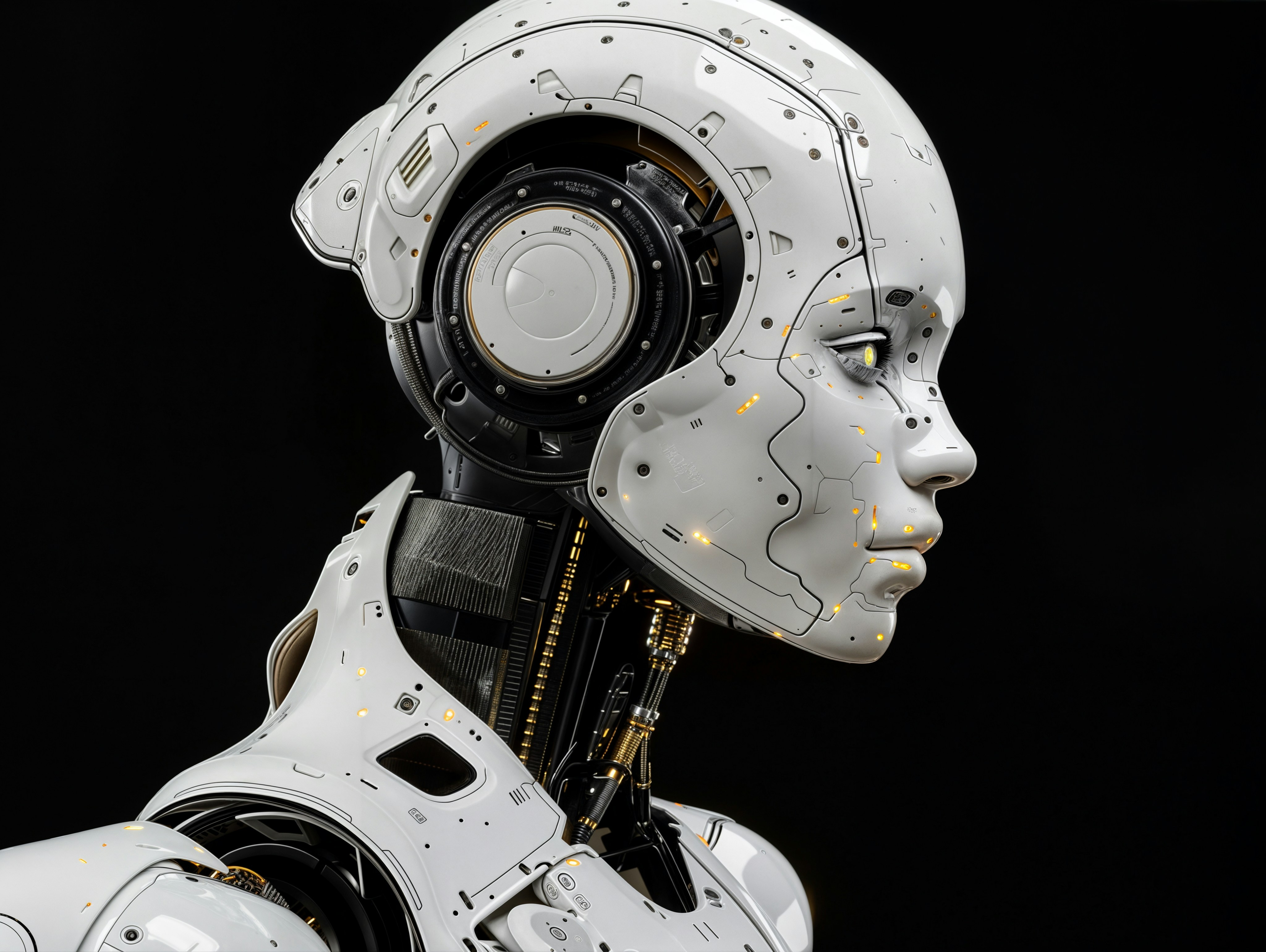
As artificial intelligence becomes more and more humanoid in its behaviors, and innovations in robotics technology allow us to create increasingly realistic robots, the relationship between man and computer must be addressed in order for these systems to work to their fullest efficiency. The uncanny valley is an important factor to account for as this technology advances, as it provides a solid foundation for human response to robotics and can be utilized to maintain harmony between life and tech. At the moment, scientists working to examine this relationship have concluded that robots should be designed with clearly different appearances to humans in order to make them acceptable to today’s population.
Saneyoshi, A. (2022, October). The other-race effect in the uncanny valley. International Journal of Human-Computer Studies, 166(102871). https://doi.org/10.1016/j.jihcs.2022.102871