Hello all, and welcome back to another post. I have not been active for a while due to a busy schedule at school, but I will try to get back to posting once or twice per month soon. Today, I am writing the first part of what I can hopefully make into a series about folk illnesses and their implications. In the context of healthcare AI models (if you haven’t read my old article, you can here), there is a potential for structural violence to develop based on folk illnesses. Aside from structural violence, folk illnesses that are treated in traditional folk manners can introduce further complications in the patient’s health. One such illness is the Latin American folk illness Susto. This will be a fairly short article, as it is the first of many that will discuss folk illnesses and medical descriptors across cultures.
Susto
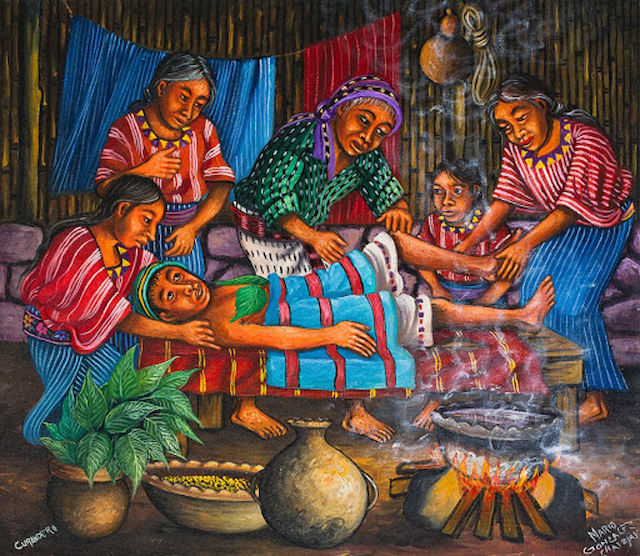
Susto, often referred to as “fright illness”, is the name for a collection of symptoms including anorexia, fever, depression, and insomnia. Frightening events are typically attributed to causing the ailment, with emotional trauma, accidents, sudden scares, and witnessing tragic events being among the believed causes. In Latino cultures, it is believed that such traumatic events causes the soul to leave the body. The sickness is highly prevalent among people from South and Central America as well as some Latinos living in the United States. Treatment for Susto is performed by a Curandero (healer) through rituals like limpias (cleansings), prayers, and herbal medicines.

Image Credit: Humanities Colaborative
Many cases have appeared where individuals have claimed to be affected by susto. One of the most well-known studies describes a teenage boy named Junior who was admitted to a hospital for presumed Guillain-Barre syndrome. Though doctors were ready to treat him for such, the boy’s mother said that the symptoms were caused by a scare. Though doctors pressed a bit more about what could have caused the susto effects, the only information offered by the pair was that the incident had taken place with Junior’s father. No consideration of other illnesses by the family was described in the article.
There is much to be considered with respect to the potential implications of folk illnesses like susto in programs and institutions; this will be further detailed in a later post. Many articles on the topic of susto discuss it in the context of cultural literacy; the failiure of many American doctors to understand the unfamiliar ailment serves as a call for increased cultural literacy in the medical sphere. The AMA article goes on to talk about communication styles in physician-patient communications as well as suggested education programs. Though I will write about the communication styles in a later article, I found the suggested literacy program to be interesting.
The AMA describes a proposed model for cultural competency first created by Lee Pachter called “awareness assessment negotiation (AAN)”. Intended to be deployed when the health values of a patient or family do not fit the established western model, the AAN involves knowing about the normative cultural values of a group, assessing whether or not the patient or family conforms to those cultural values, and finding ways to meet the patient in the middle with regards to their beliefs. For example, in the aforementioned case, the physicians could have worked more to listen to Junior’s mom as well as acknowledge the warmer and more family-based communication style characteristic of Latino culture. While the system would be useful in solving cultural clashes in an ideal world, realistically speaking, it is impractical and near impossible to educate healthcare professionals about the intricacies of every culture’s communication styles and values. Still, the importance of cultural literacy that these cases convey is an importance that must be acted upon.
Though this post was brief, I enjoyed writing about a new topic, and I hope to learn more about healthcare and medical anthropology as I continue to write. Stay tuned for the next article!