Tag: mental-health

  • Cultural Stomachaches: Empacho

    Cultural Stomachaches: Empacho

    Hello all, and welcome to another AnthroKy article! Today, I am writing about another Latin American folk illness that appears rather often in anthropological studies. To recap from previous posts, folk illnesses are sets of symptoms clustered into “illnesses” that are only recognized within certain cultures. If you are new to the concept of folk illnesses and want to learn about them more deeply, you can read more about them here. Though I will continue to publish articles on anthropological applications to interesting phenomena, I plan to research folk illnesses and medical anthropology over the next few months. After exploring cultural ailments in Latin American peoples, I will shift the focus of my articles to African American experiences with asthma.

    Empacho

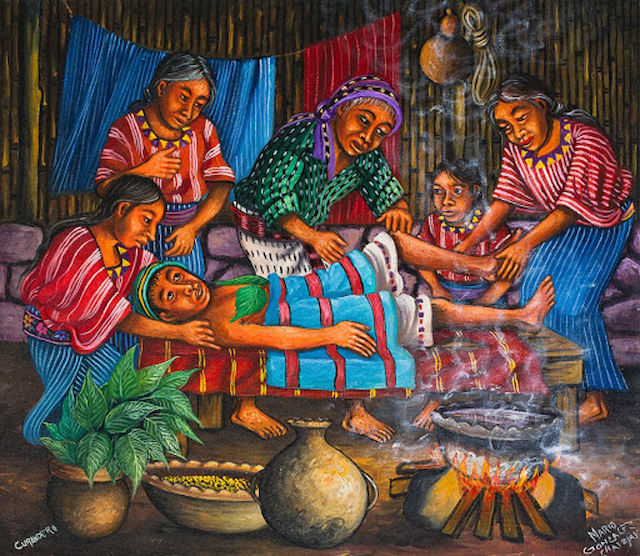
    Empacho is recognized by multiple medical organizations as one of the three major Latino culture-bound syndromes (along with Susto and Mal de Ojo). Closely resembling dyspepsia, the syndrome is described as a feeling that food or other matter has stuck to the walls of the stomach or intestines. This creates a sensation of physical blockage in the intestine, with symptoms typically including loss of appetite, stomach pain, cramping, nausea, and constipation. Those who report experiencing Empacho attribute it to dietary indiscretions such as eating too quickly and consuming raw or spoiled food. While this appears to be a harmless cultural classification for a common occurrence, traditional Empacho treatments can be harmful for patients, especially if the underlying condition being classified as the folk illness is actually an acute medical emergency. These treatments range from abdominal massages intended to “dislodge” trapped food to “back snapping”, a technique where skin on the patient’s back is “snapped back” to relieve the tension in the intestine. Less popular is the ingestion of lead-based remedies, stored in the homes of about 11% of Mexican households (PubMed). According to the CDC, lead-based medicines are extremely dangerous, posing risks of damage to the brain and body. Treatment is typically administered by family members at home or with folk healers (curanderos or sobadores).

    Cultural Application

    Empacho has been studied extensively by medical anthropologists and public health researchers alike. The treatment methods practiced by Latin Americans have been closely studied, in particular. Most studies have been conducted in order to mitigate harmful practices, building on the examination of the impacts of traditional treatments of Susto, the dangers of traditional treatment on unofficial illnesses can be seen in the way that Empacho is treated in many individuals. Relating to the purpose of this series (to examine how a diagnostic AI model could impact cultural illness and be impacted by it), beliefs that one is suffering from Empacho could complicate a diagnosis by skewing the user’s provided information if they are part of the Latin American culture. Similar to Susto, an AI model trained by American doctors only could have a heightened likelihood of misdiagnosing symptoms due to the lack of cultural training of the model, coupled with the reporting bias of the patient. This article is only a brief examination of another popular illness that has the potential to lead to misdiagnoses. Next week, I will delve further into the issue of culture and race-based bias in diagnoses as I study African Americans and asthma. Thank you for reading!

    Sources

    https://pubmed.ncbi.nlm.nih.gov/9783868

    https://www.cdc.gov/lead-prevention/prevention/foods-cosmetics-medicines.html
  • Understanding Susto: The Impacts of Fright Illness

    Understanding Susto: The Impacts of Fright Illness

    Hello all, and welcome back to another post. I have not been active for a while due to a busy schedule at school, but I will try to get back to posting once or twice per month soon. Today, I am writing the first part of what I can hopefully make into a series about folk illnesses and their implications. In the context of healthcare AI models (if you haven’t read my old article, you can here), there is a potential for structural violence to develop based on folk illnesses. Aside from structural violence, folk illnesses that are treated in traditional folk manners can introduce further complications in the patient’s health. One such illness is the Latin American folk illness Susto. This will be a fairly short article, as it is the first of many that will discuss folk illnesses and medical descriptors across cultures.

    Susto

    Susto, often referred to as “fright illness”, is the name for a collection of symptoms including anorexia, fever, depression, and insomnia. Frightening events are typically attributed to causing the ailment, with emotional trauma, accidents, sudden scares, and witnessing tragic events being among the believed causes. In Latino cultures, it is believed that such traumatic events causes the soul to leave the body. The sickness is highly prevalent among people from South and Central America as well as some Latinos living in the United States. Treatment for Susto is performed by a Curandero (healer) through rituals like limpias (cleansings), prayers, and herbal medicines.

    Image Credit: Humanities Colaborative

    Many cases have appeared where individuals have claimed to be affected by susto. One of the most well-known studies describes a teenage boy named Junior who was admitted to a hospital for presumed Guillain-Barre syndrome. Though doctors were ready to treat him for such, the boy’s mother said that the symptoms were caused by a scare. Though doctors pressed a bit more about what could have caused the susto effects, the only information offered by the pair was that the incident had taken place with Junior’s father. No consideration of other illnesses by the family was described in the article.

    There is much to be considered with respect to the potential implications of folk illnesses like susto in programs and institutions; this will be further detailed in a later post. Many articles on the topic of susto discuss it in the context of cultural literacy; the failiure of many American doctors to understand the unfamiliar ailment serves as a call for increased cultural literacy in the medical sphere. The AMA article goes on to talk about communication styles in physician-patient communications as well as suggested education programs. Though I will write about the communication styles in a later article, I found the suggested literacy program to be interesting.

    The AMA describes a proposed model for cultural competency first created by Lee Pachter called “awareness assessment negotiation (AAN)”. Intended to be deployed when the health values of a patient or family do not fit the established western model, the AAN involves knowing about the normative cultural values of a group, assessing whether or not the patient or family conforms to those cultural values, and finding ways to meet the patient in the middle with regards to their beliefs. For example, in the aforementioned case, the physicians could have worked more to listen to Junior’s mom as well as acknowledge the warmer and more family-based communication style characteristic of Latino culture. While the system would be useful in solving cultural clashes in an ideal world, realistically speaking, it is impractical and near impossible to educate healthcare professionals about the intricacies of every culture’s communication styles and values. Still, the importance of cultural literacy that these cases convey is an importance that must be acted upon.

    Though this post was brief, I enjoyed writing about a new topic, and I hope to learn more about healthcare and medical anthropology as I continue to write. Stay tuned for the next article!

  • A Look Into Cultural Influences on Attachment Styles

    A Look Into Cultural Influences on Attachment Styles

    Introduction

    Hello all, and welcome to my first post of the new year! Today, I am researching a rather niche topic that did not realize could be looked at through an anthropological lens: attachment styles. I recently learned about this psychological phenomenon during my studies in AP Psych class, and I found the science behind innate infant behaviors to be fascinating.

    A Brief History of Attachment Theory

    First developed by the 20th century psychiatrist John Bowlby, attachment theory postulates that infants must bond with a primary caregiver to properly develop socially and emotionally. Though the concept of attachment has been studied extensively in the last 100 years, developmental psychologist Mary Ainsworth’s famous “strange situation” experiment paved the way for modern understanding. This experiment placed infants in an unfamiliar room with a caregiver before removing the caregiver and leaving the infants alone. After a while, the caregivers returned, and the reactions displayed by the infants were recorded. This study found that attachment to a caregiver typically is expressed in either a secure or insecure manner, with insecure attachment taking the form of anxious attachment, avoidant attachment, and disorganized attachment (anxious-avoidant). Though one’s attachment style manifests itself at an early age and is influenced mainly by primary caregiver interactions, these styles tend to stick with us into adulthood, and they continue to be evident in mature relationship dynamics.

    Cultural Influences

    Now that an understanding of the psychology behind attachment styles has been established, I will turn to a well-known meta-analytic study of existing “strange situation” experiments (Van Ijzendoorn & Kroonenberg) across cultures to examine cultural differences in attachment. This analysis blends psychology and anthropology in its classification of cultures as either collectivist or individualist (see earlier article). Examining almost 2000 instances of the strange situation across 8 different cultures, researchers found that levels of secure attachment were relatively uniform across cultures (with Britain having the highest percentage and China having the lowest). More interestingly, individualistic countries that value independence tended to have higher levels of disorganized attachment, while collectivistic countries tended to have high levels of resistant anxious attachment. Despite these findings, intercultural variations of attachment styles suggest that culture is not a necessarily a primary influence on attachment styles or parenting styles. Moreover, unique ways of life (such as the Israeli way of raising children in a kibbutz) can contribute to the development of attachment styles that can skew the overall outcome of studies such as this one. In conclusion, culture plays a role in the development of attachment styles, but unique traditions as well as differing parenting styles mean that more research needs to be done to make a definitive statement as to what extent culture truly affects attachment.

    Thank you for reading this month’s post! If you are interested in the concept of attachment styles and want to learn about what yours could be, check out this short survey that gives you a general idea of your style: https://www.attachmentproject.com/

    Note: I am in no way affiliated with the linked survey; I included it purely as an interesting resource.

  • Cheese!: The Implications of a Simple Smile Across Cultures

    Cheese!: The Implications of a Simple Smile Across Cultures

    If you’ve read my blog before, there is a very real chance that you’ve seen me use the term “across cultures” to the point of sounding a bit trite. However, this time, I feel as if I have found a use of the term that is worth its incessant repetition.

    An occurrence that has always attracted my curiosity is the smile. Given thought, it is a truly fascinating thing that we in the United States are smiling to express their happiness at ages as young as six to twelve weeks. When pondering this, I began to wonder: ‘Is smiling innate? Do Japanese babies also smile to show happiness? Do German babies also smile to show happiness? Do Brazilian babies also smile to show happiness? Would the act of curving your lips upwards still signal your contentment to others if you were 5,000 miles away?’. These are all questions that I hope to find answers while I compose this week’s brief but hopefully rewarding post.

    Image Credit: Unsplash

    What Does a Smile Mean in Different Cultures?

    For the lack of a need to introduce the act of smiling (a phenomenon with which you are hopefully acquainted with at this point), I will dive right into the interpretations of a smile around the world. While smiling in America is common and widely accepted as an expression of happiness, people identifying with the Japanese culture typically do not feel the same way. In Japan, individuals have a different relationship with self-expression that tends to be less accepting of it than in America. In fact, their interpretation of expression of happiness lies more so in the look one gets in their eyes when experiencing cheerful or pleasant emotions. In a study published by Yuki, Maddux, and Masuda, researchers found that Japanese participants felt that Kaomoji [i.e. (^_^) & (T_T)] were more representative of their emotions than emojis frequently used by Americans [i.e. 🙂 & :-(]. Japan isn’t the only country that differently interprets smiling, however; smiling at someone in Russia may arouse their suspicion, while you may be surprised to find a very fearful person flashing all 32 shiny white teeth at you on your family trip to Thailand. In conclusion, a smile carries different meaning all around the world, whether it be in Japan, Russia, or America.

    The “Why”

    It is known that the smile is something interpreted differently around the globe, but what lies at the root of this phenomenon? There are many theorized reasons as to why we perceive smiles the way we do. I will use the difference between WEIRD (western, educated, industrialized, rich, democratic) cultures and East Asian cultures as the primary example here, as the difference between these cultures tends to be fairly drastic. Variations in cultural values—specifically between the individualistic West and the collectivistic East—may shape how happiness is expressed(Saskatchewan Polytechnic). This can play into different cultural models of self, and studies have shown that, when asked to complete the sentence “I am ____” 20 times, Japanese students tended to fill in the blank with social roles (i.e. cousin, daughter, student) as opposed to American students, who preferred to describe themselves with sociopsychological attributes (i.e. friendly, outgoing) (Cousins, 1989). These studies demonstrate a different relationship with emotion and its expression in individuals on other sides of the globe. Additionally, one theory postulates that countries composed of individuals with different cultural backgrounds tend to smile more due to the fact that their diverse cultural composition (individuals with different values and language coming together) requires nonverbal communication to be used as a cue more frequently. In contrast, relatively homogenous nations such as Japan may not require the same level of nonverbal cues, as the country’s language is uniform throughout.

    Knowing that smiling is not the norm for emotional expression in every part of the world, how do people from different cultures express their contentment and cheerfulness? Body language, tone of voice, social harmony behaviors, laughter, and “eye expressions” are all different ways that people around the world show their happiness.