Tag: health

  • Cultural Stomachaches: Empacho

    Cultural Stomachaches: Empacho

    Hello all, and welcome to another AnthroKy article! Today, I am writing about another Latin American folk illness that appears rather often in anthropological studies. To recap from previous posts, folk illnesses are sets of symptoms clustered into “illnesses” that are only recognized within certain cultures. If you are new to the concept of folk illnesses and want to learn about them more deeply, you can read more about them here. Though I will continue to publish articles on anthropological applications to interesting phenomena, I plan to research folk illnesses and medical anthropology over the next few months. After exploring cultural ailments in Latin American peoples, I will shift the focus of my articles to African American experiences with asthma.

    Empacho

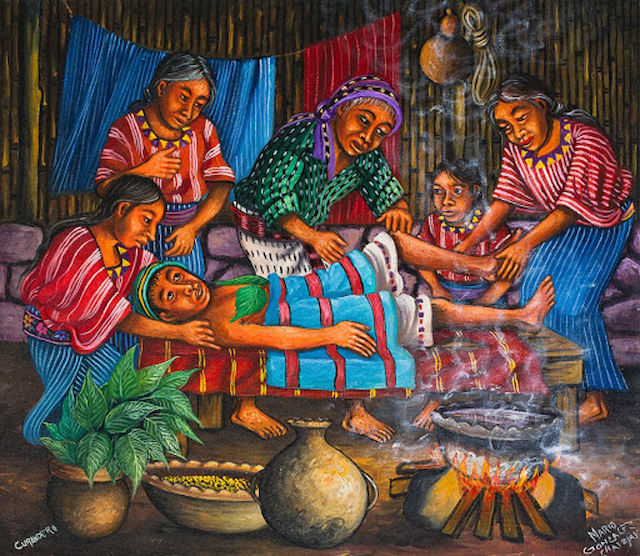
    Empacho is recognized by multiple medical organizations as one of the three major Latino culture-bound syndromes (along with Susto and Mal de Ojo). Closely resembling dyspepsia, the syndrome is described as a feeling that food or other matter has stuck to the walls of the stomach or intestines. This creates a sensation of physical blockage in the intestine, with symptoms typically including loss of appetite, stomach pain, cramping, nausea, and constipation. Those who report experiencing Empacho attribute it to dietary indiscretions such as eating too quickly and consuming raw or spoiled food. While this appears to be a harmless cultural classification for a common occurrence, traditional Empacho treatments can be harmful for patients, especially if the underlying condition being classified as the folk illness is actually an acute medical emergency. These treatments range from abdominal massages intended to “dislodge” trapped food to “back snapping”, a technique where skin on the patient’s back is “snapped back” to relieve the tension in the intestine. Less popular is the ingestion of lead-based remedies, stored in the homes of about 11% of Mexican households (PubMed). According to the CDC, lead-based medicines are extremely dangerous, posing risks of damage to the brain and body. Treatment is typically administered by family members at home or with folk healers (curanderos or sobadores).

    Cultural Application

    Empacho has been studied extensively by medical anthropologists and public health researchers alike. The treatment methods practiced by Latin Americans have been closely studied, in particular. Most studies have been conducted in order to mitigate harmful practices, building on the examination of the impacts of traditional treatments of Susto, the dangers of traditional treatment on unofficial illnesses can be seen in the way that Empacho is treated in many individuals. Relating to the purpose of this series (to examine how a diagnostic AI model could impact cultural illness and be impacted by it), beliefs that one is suffering from Empacho could complicate a diagnosis by skewing the user’s provided information if they are part of the Latin American culture. Similar to Susto, an AI model trained by American doctors only could have a heightened likelihood of misdiagnosing symptoms due to the lack of cultural training of the model, coupled with the reporting bias of the patient. This article is only a brief examination of another popular illness that has the potential to lead to misdiagnoses. Next week, I will delve further into the issue of culture and race-based bias in diagnoses as I study African Americans and asthma. Thank you for reading!

    Sources

    https://pubmed.ncbi.nlm.nih.gov/9783868

    https://www.cdc.gov/lead-prevention/prevention/foods-cosmetics-medicines.html
  • Understanding Susto: The Impacts of Fright Illness

    Understanding Susto: The Impacts of Fright Illness

    Hello all, and welcome back to another post. I have not been active for a while due to a busy schedule at school, but I will try to get back to posting once or twice per month soon. Today, I am writing the first part of what I can hopefully make into a series about folk illnesses and their implications. In the context of healthcare AI models (if you haven’t read my old article, you can here), there is a potential for structural violence to develop based on folk illnesses. Aside from structural violence, folk illnesses that are treated in traditional folk manners can introduce further complications in the patient’s health. One such illness is the Latin American folk illness Susto. This will be a fairly short article, as it is the first of many that will discuss folk illnesses and medical descriptors across cultures.

    Susto

    Susto, often referred to as “fright illness”, is the name for a collection of symptoms including anorexia, fever, depression, and insomnia. Frightening events are typically attributed to causing the ailment, with emotional trauma, accidents, sudden scares, and witnessing tragic events being among the believed causes. In Latino cultures, it is believed that such traumatic events causes the soul to leave the body. The sickness is highly prevalent among people from South and Central America as well as some Latinos living in the United States. Treatment for Susto is performed by a Curandero (healer) through rituals like limpias (cleansings), prayers, and herbal medicines.

    Image Credit: Humanities Colaborative

    Many cases have appeared where individuals have claimed to be affected by susto. One of the most well-known studies describes a teenage boy named Junior who was admitted to a hospital for presumed Guillain-Barre syndrome. Though doctors were ready to treat him for such, the boy’s mother said that the symptoms were caused by a scare. Though doctors pressed a bit more about what could have caused the susto effects, the only information offered by the pair was that the incident had taken place with Junior’s father. No consideration of other illnesses by the family was described in the article.

    There is much to be considered with respect to the potential implications of folk illnesses like susto in programs and institutions; this will be further detailed in a later post. Many articles on the topic of susto discuss it in the context of cultural literacy; the failiure of many American doctors to understand the unfamiliar ailment serves as a call for increased cultural literacy in the medical sphere. The AMA article goes on to talk about communication styles in physician-patient communications as well as suggested education programs. Though I will write about the communication styles in a later article, I found the suggested literacy program to be interesting.

    The AMA describes a proposed model for cultural competency first created by Lee Pachter called “awareness assessment negotiation (AAN)”. Intended to be deployed when the health values of a patient or family do not fit the established western model, the AAN involves knowing about the normative cultural values of a group, assessing whether or not the patient or family conforms to those cultural values, and finding ways to meet the patient in the middle with regards to their beliefs. For example, in the aforementioned case, the physicians could have worked more to listen to Junior’s mom as well as acknowledge the warmer and more family-based communication style characteristic of Latino culture. While the system would be useful in solving cultural clashes in an ideal world, realistically speaking, it is impractical and near impossible to educate healthcare professionals about the intricacies of every culture’s communication styles and values. Still, the importance of cultural literacy that these cases convey is an importance that must be acted upon.

    Though this post was brief, I enjoyed writing about a new topic, and I hope to learn more about healthcare and medical anthropology as I continue to write. Stay tuned for the next article!

  • Barroom Biology: Aldh2 Polymorphism in Asian Culture

    Barroom Biology: Aldh2 Polymorphism in Asian Culture

    Hello everyone, and welcome back to another blog post! For this post, I decided to explore a bit in the world of biological anthropology, one of the four main branches of anthropology. I typically try to keep my articles primarily centered around the branch of cultural (or social, for my British readers) anthropology, but this topic interested me enough to expand my horizons.

    Aldh2 Polymorphism

    Colloquially referred to as “Asian Flush”, alcohol flush reaction is a condition in which an individual can develop flushing, swelling, nausea, and a heightened heartbeat, among other symptoms. Such occurs in response to drinking in moderate to heavy quantities in individuals who have Aldh2 Polymorphism. Aldh2 (aldehyde dehydrogenase) is an enzyme encoded by the Aldh2 gene located on chromosome 12. It plays a major role in alcohol metabolism, that is, when the Aldh2 gene’s expression is producing both of its major isozymes. While most White, Black, Latino, and Middle Eastern people have no issues with their Aldh2, 35-50% of East Asian individuals are missing the mitochondrial isozyme. This makes those with the genetic mutation susceptible to alcohol flush reaction, as they are not able to use the isozyme to metabolize the toxic acetaldehyde in alcohol and convert it to the safer compound acetate. The excess of acetaldehyde is what causes the symptoms of flush reaction in the body. Those who have Aldh2 polymorphism carry the rs671 allele on chromosome 12 (also known as Aldh2*2), causing the mutation. (PubMed, Wikipedia)

    Image Credit: plos.org

    If the load of medical talk was too much for you, luckily, we will now move over to anthropology and examine how this mutation came to impact such a large amount of one population. Many theories exist claiming to answer the mystery of how it came to be; I will address each one and provide my own commentary as to how each could be correct. An article written by Yi-Chyan Chen et al. postulates that the initial genetic mutation spread easily due to the protection it provided from alcoholism as well as the dangers provided by alcohol in early times. This theory says that the mutated gene was favored because of the low rates of excessive alcohol consumption exhibited by its carriers (Chen et al., 2021). Chen’s idea is missing an explanation for why East Asian alcohol fostered natural selection at such a high rate, though, which is why I must continue to the next theory. A more recent study by Giovanni Denna et al. fills in some of the holes in Chen’s theory. Drawing on human evolution more so than Chen, it is here proposed that the Neolithic transition, a major shift in human life from nomadic hunter-gatherer living to a way of life with established settlements and the first agriculture. With rice first being cultivated during this period, the diets of these newly settled homo sapiens underwent a massive change involving the introduction of new pathogens. Denna’s theory suggests that selective pressure stemming from the new pathogens favored ALDH2*2 due to the protection it provided from microorganisms in water or fermented liquids used in alcoholic beverages, taking the focus off of alcohol itself and shifting it to the ingredients that make it up. The evolutionary pressure was reinforced by the popularization of rice-based alcohol, as it is proposed that rice may have been a carrier of pathogens (Peng et al., 2010). A final theory proposes that the selection may have been due to other non-alcohol related effects. Experts have not made a decisive conclusion as to which theory is correct, but the current consensus is that the right answer lies somewhere in the middle ground between all the theories.

    Effect on Culture

    Though the collection of studies on cultural implications of the ALDH2*2 gene is sparse to say the least, there have been a few interesting effects observed. To state the obvious, the gene deficiency leads to a lower rate of alcohol dependency in the affected population as well as a modified reaction to peer drinking. In cultures like Japan where the majority of people are carriers of the modified gene, drinking traditions have adapted to protect from the flush reaction; alcohol is generally consumed more slowly and in smaller amounts at a time. In some cultures like Japan, an attitude of accommodation towards those with the flush reaction is prevalent as a result of awareness of the flush reaction. This fits with the recurring anthropological theme of biology influencing behavior. Surprisingly, not many other facts on the matter have been revealed by research, as the amount of studies looking into ALDH2 deficiency leaves something to be desired.

    Sources Referenced

    Chen, Y.-C., Yang, L.-F., Lai, C.-L., & Yin, S.-J. (2021). Acetaldehyde Enhances Alcohol Sensitivity and Protects against Alcoholism: Evidence from Alcohol Metabolism in Subjects with Variant ALDH2*2 Gene Allele. Biomolecules, 11(8), 1183. https://doi.org/10.3390/biom11081183

    Shin, M. J., Cho, Y., & Davey Smith, G. (2017). Alcohol Consumption, Aldehyde Dehydrogenase 2 Gene Polymorphisms, and Cardiovascular Health in Korea. Yonsei medical journal, 58(4), 689–696. https://doi.org/10.3349/ymj.2017.58.4.689

    Deiana, G., Sun, R., Huang, J., Napolioni, V., & Ciccocioppo, R. (2024). Contribution of infectious diseases to the selection of ADH1B and ALDH2 gene variants in Asian populations. Alcohol, clinical & experimental research, 48(5), 855–866. https://doi.org/10.1111/acer.15288

    Wikipedia contributors. (2025, November 4). Alcohol flush reaction. In Wikipedia, The Free Encyclopedia. Retrieved 23:10, December 3, 2025, from https://en.wikipedia.org/w/index.php?title=Alcohol_flush_reaction&oldid=1320340582

    Wikipedia contributors. (2025, July 25). ALDH2. In Wikipedia, The Free Encyclopedia. Retrieved 23:12, December 3, 2025, from https://en.wikipedia.org/w/index.php?title=ALDH2&oldid=1302450652

    Peng, Y., Shi, H., Qi, Xb. et al. The ADH1B Arg47His polymorphism in East Asian populations and expansion of rice domestication in history. BMC Evol Biol 10, 15 (2010). https://doi.org/10.1186/1471-2148-10-15

    O’Shea, T., Thomas, N., Webb, B. T., Dick, D. M., Kendler, K. S., & Chartier, K. G. (2017). ALDH2*2 and peer drinking in East Asian college students. The American journal of drug and alcohol abuse, 43(6), 678–685. https://doi.org/10.1080/00952990.2017.1314489

  • Research Review: Semantics of Illness in AI Healthcare

    Research Review: Semantics of Illness in AI Healthcare

    Hello everyone, this is my first post in a while as school got off to a busy start, but I will be posting more frequently in the future, so stay tuned for more anthropology articles.

    I recently participated in a guided research program where I wrote my first research paper. Choosing a topic was slightly hard, but I eventually settled on medical anthropology. I had the most difficult task to deal with next: finding a research question. After looking into many different areas in which medical anthropology could be applied, my mentor and I looked into the development of artificial intelligence (AI) healthcare models and applications of anthropology to them.

    The concept of healthcare AI models is a relatively new one, as the technology needed to produce something effective enough to be worth developing has only just recently become available. Though experimental research could only be performed on existing prototype models (the soonest beta releases are years away), I wanted to look into issues that could arise in a fully functional healthcare model, specifically in regards to cultural differences. These theoretical issues would occur (most likely) primarily by way of cross-cultural differences in semantics or communication style.

    In terms of methodology, I interviewed six participants: a man and a woman each from Walnut Creek, USA; Istanbul, Turkiye; and Develi, Turkiye. The interviews were conducted as series of questions over international encrypted messaging app WhatsApp.

    Image credit: National Cancer Institute

    Semantic Differences

    Fortunately, there exists some research that looks into cultural differences in semantics of illness. Acclaimed Harvard professor Byron J Good’s The Heart of What’s the Matter: Semantics of Illness in Iran examines the Persian folk illness “heart distress” and its perceived causes in Iranian culture. The paper draws on observed semantic networks to trace how people describe their illness, and the result was that Iranians understand their illnesses very differently than Americans understand theirs. While outdated (it was published in 1977), Good’s study provided a strong theoretical basis for me to do more research. In a theoretical healthcare AI model, misdiagnoses could stem from semantic differences, resulting in an unintentionally biased model. This potential harm, should it become an issue, would be classified as structural violence, a form of social harm that prevents groups of people from having their essential needs met (Read more in the paper linked below).

    The first two interview questions were oriented towards semantic differences. The first asked participants to describe symptoms of a common cold to a doctor, and the second asked them to describe symptoms to an AI model. In theory, these two questions would reveal differences across cultures in both how patients interacted with physicians and how they interacted with AI. Provided symptoms were compared in a table (included below), and the style of descriptions (symptom vs biomedical, list vs na

    Cultural Comfort Differences

    The other two questions were less important to the study; these dealt with contextual differences in communication across cultures. The participants were asked to honestly give any sensitive or embarrassing symptoms that they would not feel comfortable sharing with an in-person physician. They were then asked if they would be more comfortable sharing these symptoms with an AI doctor. The purpose of these questions was to evaluate two things. First, if patients felt more comfortable sharing symptoms with a doctor and, consequently, omitted certain symptoms from a report to an AI model, misdiagnosis could occur from a skewed description. Second, if patients felt more comfortable sharing details with an AI model, they would be more likely to share full details and receive an accurate diagnosis as a result.

    Results

    It was hypothesized based on existing theory and assumptions that there would be a good deal of cultural differences in semantics of illness and comfortability interacting with an AI model. The results, however, showed minimal differences across the three cultures (see tables in the paper). There were little to no differences within the country of Turkey, and Turks tended to describe their symptoms and comfortability with in relatively similar ways. The only major difference within Turkey was that rural Turks tended to describe their illness in a symptomatic hybrid difference, while urban Turks tended to describe their illnesses in a list fashion. American and Turkish responses displayed similar levels of variation, as the only major difference between the countries was the symptoms of the common flu that they provided (more detail in the paper).

    There are many potential explanations for the high level of similarity between cultures, but experimental research is needed to verify any one of these explanations. A possible and likely reason that the results of my study were so different from Dr. Good’s is that globalization has made the world a much smaller place since 1977. With the technological revolution putting internet access into the hands of almost all people, information can be spread much more easily, and as a result, cultural mannerisms and ways of interacting bleed into each other more than they used to.

    This study was non-experimental and hypothesis-generating, so no conclusions can be drawn from the results. It does, however, raise interesting questions about how important cultural differences really are to the development of healthcare AI models.

    I would like to thank the team at Lumiere education for providing excellent services and making the experience of writing a paper much easier than it would have been if I had attempted to do it myself. I highly recommend them to anyone who needs guidance in writing and publishing their first paper.